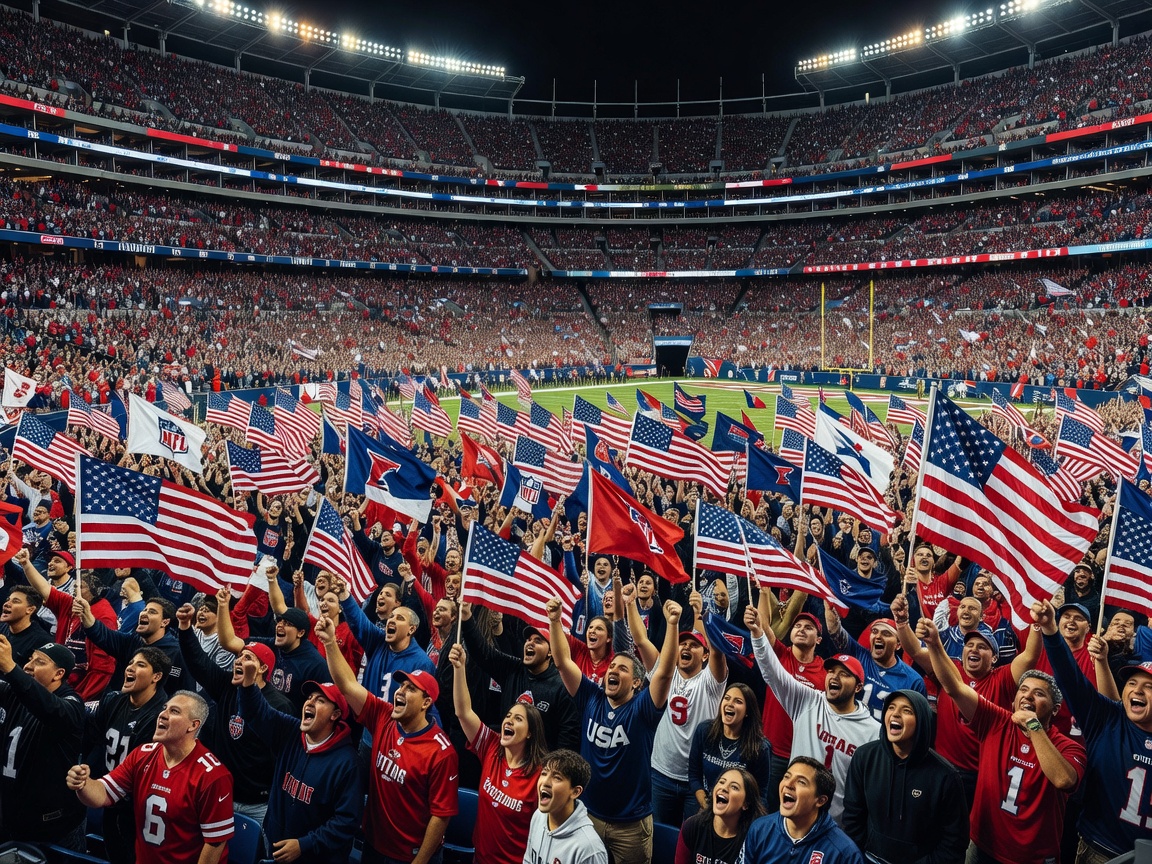
Dive deep into the most comprehensive structural breakdown of the 48-team tournament format, tracking high-stakes matchups, group dynamics, and global narratives.
Understanding the new 48-team format and North American host dynamics.
For the first time in history, the FIFA World Cup expands to 48 teams. This fundamental shift reshapes the group stages and introduces a sprawling knockout bracket spanning Canada, Mexico, and the United States.
Our editorial team breaks down how the expanded field impacts group balance, travel fatigue across time zones, and the intense mathematical probabilities of progressing beyond the initial stages.
The top-ranked nations contending for the ultimate football glory.
Defending champions and current global leaders based on historic federation standing.
European heavyweights looking to capitalize on a deep squad and tactical maturity.
South American giants relying on structural defensive strength and elite attacking talent.
A resurgent traditional power possessing incredible pace on the counter-attack.
Curated statistical breakdown of the most critical group stage fixtures.
Our editorial breakdown explains the importance behind the raw statistics. A win in the opening game drastically alters progression probability. We analyze structural match importance without resorting to speculation, providing deep tactical context for each major fixture.
Read Full Methodology →With the expanded format, some groups feature dramatic disparities in ranking metrics while others represent true "Groups of Death." Our insight engine measures the average rank discrepancy across Group A through L to highlight the toughest paths to the knockout rounds.
Tracking the structural advantages and regional expectations for the 2026 hosts.
Hosting the majority of the knockout fixtures, leveraging massive stadium infrastructure and minimal cross-border travel.
Bringing historic World Cup pedigree to the iconic venues like Estadio Azteca, relying on severe home-field passion.
A rising football nation hosting crucial group stage encounters, utilizing modern facilities in Toronto and Vancouver.
Joytrailex's proprietary metrics are strictly derived from the provided structural dataset. "Win Chance" represents a historic statistical probability based on competitive ranking gaps, not a simulated prediction. "Win Group Chance" aggregates these probabilities across the specific 4-team pod context.
Have inquiries regarding our editorial standards or data structuring?